Wind turbines are systems designed to operate under constantly changing environmental conditions with the goal of uninterrupted energy production.
The mechanical and motion transmission components used in these
structures must be selected to withstand demanding requirements such as high loads, variable speeds, and long-term operation. Turbine performance and system reliability are directly dependent on the synergy of these components.
In wind turbines, gearboxes form the basis of energy transmission
by converting the low-speed rotation of the blades into the appropriate
speed required for the generator. Stable operation under high torque
and a long service life are of critical importance in these systems. Spindle motors
used in auxiliary turbine systems provide precise and reliable motion
for maintenance, orientation (yaw/pitch), and control mechanisms.
Furthermore, vacuum pumps used in auxiliary applications within
the turbine play a supportive role in control, gripping, and service
processes. The correct selection of all these components increases
energy efficiency, reduces mechanical losses, and lowers the long-term operational costs (OPEX) of the turbine.
The objective in wind energy systems is not merely to generate power, but to ensure a sustainable, reliable, and uninterrupted operational order. Mechanical solutions selected appropriately for the application form the technical foundation of this goal.
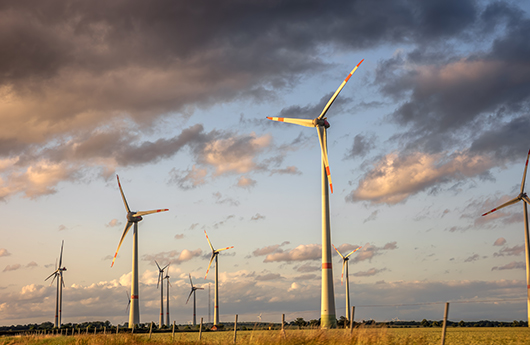 Wind turbines are systems designed to operate under constantly changing environmental conditions with the goal of uninterrupted energy production.
The mechanical and motion transmission components used in these
structures must be selected to withstand demanding requirements such as high loads, variable speeds, and long-term operation. Turbine performance and system reliability are directly dependent on the synergy of these components.
Wind turbines are systems designed to operate under constantly changing environmental conditions with the goal of uninterrupted energy production.
The mechanical and motion transmission components used in these
structures must be selected to withstand demanding requirements such as high loads, variable speeds, and long-term operation. Turbine performance and system reliability are directly dependent on the synergy of these components.

 TR
TR